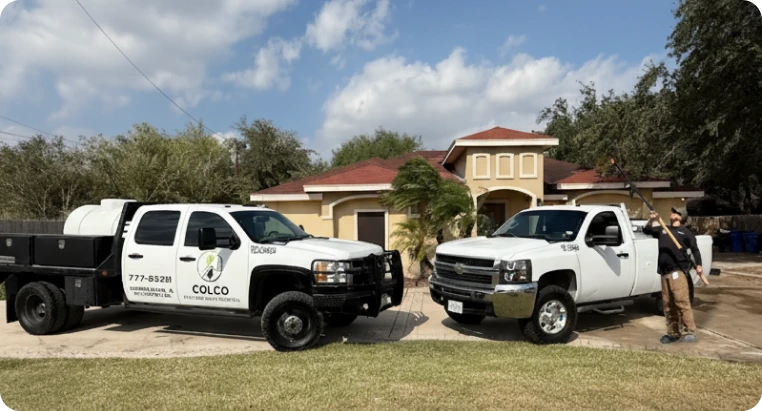
Creates a barrier to stop pests from entering.
Maintains ongoing protection against infestations.
Targets and removes existing pests effectively.

“I built Colco to be more than service—we protect family across south Texas”
Founder & Certified Pest Control Specialist

Most people don’t think about termites until they see damage. But here’s the reality in the Rio Grande Valley — termites start exploring your construction site the day you break ground. Fresh lumber on a work site? That’s a termite buffet. Wood framing going up? They’re already tunneling toward it. By the time you’re hanging drywall, colonies could be establishing themselves inside your brand new walls.
Colco Pest and Weed Control provides construction pre-treatment services that protect your new build before termites ever become a problem. We treat the soil before your slab gets poured and create protective barriers during construction — so you’re starting with protection built in, not waiting to see if you’ll need it later.
Building new? Call 956-777-6328 to schedule pre-treatment while you can still access the soil.
No Winter Break: Up north, termites slow down or die off when temperatures drop. Here? Our “winter” barely hits 50°F. Termites stay active year-round, which means your construction site is vulnerable from groundbreaking through final inspection and beyond.
Disturbed Soil Creates Desperate Colonies: When you excavate for construction, you’re breaking up established termite colonies that were living in that soil. These displaced termites don’t just leave — they immediately start searching for new food sources. Your fresh lumber and wood framing become the closest meal available.
Soil Moisture Never Quits: Between our humidity, irrigation systems, and soil that holds moisture well, subterranean termites thrive in Valley soil. They don’t have to work hard to find the moisture they need — it’s always available.
Fresh Lumber Attracts Termites Fast: New construction lumber has moisture content and natural compounds that termites find irresistible. Untreated wood sitting on a work site for weeks becomes infested before your walls are even closed up.
Pre-Treatment Costs Less Than Fixing Later: Treating soil before you pour concrete costs a few hundred to maybe a thousand dollars depending on size. Treating an existing home with termite damage? You’re looking at thousands for treatment plus repairs. Prevention is always the cheaper option.
Your Warranty Probably Requires It: Most comprehensive termite warranties start with pre-treatment documentation. Without it, you either can’t get coverage or you’re limited to basic plans that don’t offer much protection.
Some Lenders Require It: If you’re using FHA or VA financing in a termite-prone area — which we absolutely are — pre-treatment documentation may be required. Even if it’s not mandatory for your loan, it’s smart protection for your investment.
Phase 1: Pre-Pour Soil Treatment Before your concrete slab gets poured, we treat every inch of soil that’ll be covered by concrete. This creates a chemical barrier in the ground that termites can’t detect. When they tunnel through treated soil looking for food, they pick up the product and either die or — more importantly — carry it back to their colony and eliminate the entire population.
What we treat:
This is your primary protection layer. Once that slab is poured, you can’t access this soil again without drilling through concrete — which is expensive and gives you incomplete coverage.
Phase 2: Post-Pour Perimeter Treatment After the slab cures and your foundation is set, we treat around the entire outside perimeter. This creates an exterior barrier that stops termites from accessing your structure through foundation edges, expansion joints, or anywhere concrete meets soil.
What we treat:
Phase 3: Documentation and Final Inspection We provide complete documentation of every treatment application — exact treatment dates, products used with application rates, every area treated with measurements, square footage covered, and treatment zone diagrams. This documentation matters for building inspections, warranty activation, lender requirements, and future homeowner records. Keep it with your closing documents.
Before Slab Pour: Soil treatment happens after your site is graded and utility rough-in is complete, but before concrete trucks show up. We coordinate directly with your contractor to hit the right window. Miss this window and you’re stuck with drilling through concrete later.
After Slab, Before Framing: Perimeter treatment typically happens after your slab cures but before framing starts. The site is open, there’s no construction debris in the way, and we can access everything easily.
During Construction: If you’re building with a crawl space, basement, or pier-and-beam foundation, treatment happens at multiple phases during construction.
Final Treatment: We do a final perimeter treatment and inspection after construction is substantially complete but before landscaping goes in — ensuring complete protection and giving us a chance to catch anything that needs attention.
We stay flexible with your construction schedule. Give us 24–48 hours notice and we’ll coordinate timing to keep your project moving without delays.
Residential: Single-family homes, townhomes and duplexes, apartment and condo buildings, manufactured home installations, and additions or room expansions.
Commercial: Office buildings, retail centers, warehouses and industrial facilities, schools, medical facilities, and restaurants or food service buildings.
Agricultural Structures: Packing houses, storage facilities, and processing buildings.
Non-Repellent Formulas: These products are completely undetectable to termites. They can’t smell it, taste it, or avoid it. Termites tunnel right through treated soil, pick up the product, and carry it back to their colony — eliminating entire populations, not just individual termites.
Long-Term Protection: The products we apply provide 5–10 years of protection when properly applied to soil before concrete covers it. This isn’t a spray-and-pray situation — it’s long-lasting prevention.
Construction-Safe: All products are safe for construction workers and future occupants once applied and dried according to label instructions.
EPA Registered for Texas Use: We only use products registered with the EPA and approved for use in Texas. Everything is above board and properly documented.
You Get Complete Coverage: When we treat before construction, we can access 100% of the soil under your slab — every square inch treated uniformly. Retrofitting an existing home means drilling holes through concrete every few feet, and you never get complete coverage because there are gaps between drill points where termites can potentially slip through.
It Costs Way Less: Pre-treatment for a typical home runs a few hundred to maybe a thousand dollars. Retrofitting an existing structure means paying for concrete drilling, moving furniture, and potential interior disruption — at a fraction of the protection.
Better Protection from Day One: Treating soil before it’s covered creates a uniform protective barrier with no gaps. Retrofit treatments have spacing between drill points — and termites are good at finding gaps.
Peace of Mind Built In: The protection is already working from the day you move in. You’re not waiting and wondering.
Warranty Eligibility: Most comprehensive termite warranties require pre-treatment documentation as a starting point. Without it, your coverage options are limited or nonexistent.
We Work with Your Schedule: Give us 24–48 hours notice and we’ll coordinate treatment timing to fit your construction schedule without causing delays. We understand you’re juggling subcontractors, inspections, and deadlines — we work around that.
Weather Matters: Soil treatment needs dry conditions. If rain hits within 24 hours of treatment, it can wash product away before it bonds with soil. We monitor weather forecasts and will reschedule if conditions aren’t right. Better to wait a day than compromise effectiveness.
Site Needs to Be Ready: We need clear access to treatment areas. Excavation should be complete, forms in place for slab pours, and work areas ready for application.
Inspector Coordination: We provide all required documentation and can be present during inspection if needed. We’ve worked with inspectors across the Valley — we know what they’re looking for.
Multi-Unit Projects: Building apartments, townhomes, or multiple units? We schedule treatment in phases as each building section reaches the appropriate stage. We’ve handled subdivision developments with dozens of homes and know how to coordinate large-scale projects.
You Save Thousands Long-Term: Pre-treatment adds maybe 0.1–0.3% to your total construction cost — nothing compared to the tens of thousands you could spend repairing termite damage later.
Warranty Protection from Day One: Pre-treatment documentation lets you activate comprehensive termite warranties that provide ongoing inspections, retreatment if needed, and sometimes even damage repair coverage.
Higher Resale Value: Pre-treatment documentation with active warranty coverage is attractive to buyers and adds value during appraisal. It shows you protected the home from day one.
No Drilling Through Your New Floors Later: The protection is already built in — no one needs to drill holes through your concrete slab five years down the road.
Actual Peace of Mind: You’re not lying awake wondering if termites are eating your brand new home. The protection is working 24/7 from the moment you move in.
High Water Tables in Some Areas: Parts of the Valley have high water tables that affect how termiticide behaves in soil. We adjust application rates and methods based on your specific site conditions.
Sandy Loam Soil Characteristics: Our soil drains well — good for construction, but it means termiticide can move more than in clay soils. We use products specifically formulated for our soil types and adjust application accordingly.
Irrigation System Timing: If you’re installing irrigation post-construction, we coordinate timing so trenching and installation doesn’t disrupt the termite barrier we’ve created.
Slab-on-Grade Standard Construction: Almost every home in the Valley is built slab-on-grade. This makes pre-pour soil treatment absolutely critical — there’s zero access to soil after that concrete is poured. Miss the pre-treatment window and you’re stuck with expensive drilling later.
Former Agricultural Land: Many new construction sites in the Valley are converted farmland or citrus groves with established termite colonies already living in the soil. This requires more aggressive pre-treatment than treating virgin land.
Year-Round Construction Season: We build year-round here because weather allows it. That also means termites are active during construction in December just like they are in July. There’s no “safe” season.
Step 1: Site Evaluation — We visit the construction site to evaluate soil conditions, drainage, and treatment requirements based on building plans.
Step 2: Coordination with Builder — We coordinate with your contractor or builder to schedule treatment at the appropriate construction phase.
Step 3: Pre-Treatment Application — We apply termiticide to soil under the slab footprint, around plumbing, and in all required areas per label instructions and building codes.
Step 4: Documentation — We provide detailed documentation of treatment including products used, application rates, areas covered, and treatment date.
Step 5: Post-Pour Perimeter Treatment — After concrete cures, we treat the exterior foundation perimeter to complete the protective barrier.
Step 6: Final Inspection — We conduct a final inspection and provide complete treatment records for your files.
Cost depends on square footage, foundation type, site accessibility and soil conditions, and any special challenges on site. Most residential pre-treatments run from a few hundred dollars for smaller homes up to around a thousand for larger structures — roughly 0.1–0.3% of your total construction cost. Commercial and multi-unit projects are quoted based on specific requirements.
Call us at 956-777-6328 for a quote based on your construction plans. We’ll need square footage and basic building plans to give you accurate pricing.
If you’re using FHA or VA financing, check with your lender about pre-treatment requirements. Some loans in termite-prone areas — which South Texas absolutely is — require termite inspections and may require pre-treatment documentation for new construction.
Even if your lender doesn’t require it, most buyers using these loans will want to see pre-treatment documentation because it protects their investment and makes the home easier to insure and resell. We provide all documentation needed for lender requirements, insurance applications, and closing records. Keep this documentation with your home records — you’ll need it for warranty activation and future resale.
Starting with pre-treatment makes you eligible for comprehensive termite warranties including annual inspections, retreatment coverage if termites appear, damage repair coverage on certain warranty levels, and transferable protection that adds value when you sell. Without pre-treatment documentation, your coverage options are limited. Start right and you can get full protection. Ask us about warranty options when scheduling pre-treatment.
Building multiple homes or an entire subdivision? We handle large-scale projects regularly — coordinating treatment across multiple units and phases, providing volume pricing, managing documentation for every unit, and working with building inspectors across multiple properties. We’ve worked with production builders throughout the Valley on projects ranging from duplexes to 50+ home subdivisions. We know how to coordinate with your schedule and keep things moving.
The absolute best time to protect your new construction from termites is during construction — not after. Once that concrete slab is poured, your options are limited and expensive. Once those walls are closed up, treatment becomes complicated and invasive.
Pre-treatment is your chance to build protection in from the foundation up. It costs less, works better, and gives you peace of mind from day one. Call Colco at 956-777-6328 to schedule construction pre-treatment service. We’ll coordinate with your builder, treat at the right construction phases, and provide complete documentation for your records.
We provide construction pre-treatment services across the Rio Grande Valley, including McAllen, Mission, Edinburg, Pharr, Alamo, Alton, Weslaco, Harlingen, Brownsville, and surrounding communities. View our full service areas to confirm we cover your location.
Monday through Saturday, 8 AM to 8 PM. Let’s build your termite protection from the ground up — the right way, the first time.

Tri-Vor-Guard Technology is our advanced pest control system, combining three powerful lines of defense to protect homes and businesses across the Rio Grande Valley.
This innovative approach delivers complete, long-term protection, tackling current infestations while preventing future pest problems. With Tri-Vor-Guard, you can count on reliable, year-round defense against the most common threats in South Texas.
Posted on Google
 TakerJoes
Trustindex verifies that the original source of the review is Google.
I can’t say enough good things about Colco Pest and Weed Control! I had a pest issue that was driving me crazy, and they completely took care of it. From the moment they arrived, they were friendly, professional, and really knew their stuff. They inspected everything carefully, explained what was causing the problem, and treated every spot with precision. Within just a few days, I noticed a huge difference the pests were completely gone in all areas except 1, so i called back and let them know about it and they immediately took care of the issue. What impressed me most was how respectful and detail-oriented they were, making sure the job was done right and that I was satisfied before leaving. It’s rare to find a company that actually takes pride in their work they do now a days. If you’re in the McAllen to La Joya area and need reliable pest control, don’t waste time calling anyone else these are the people to go with. 100% recommend! Better yet I'm gonna call back right now so they can also treat the ugly weeds outside.Posted on Google Cristina EspinozaCody with Colco was very informative with explaining what he would need to do for the issue I had for indoor and outdoor pests - specifically for German roaches and fleas in the yard. I started seeing results the same day. I'm very satisfied with Colco and will continue to use their services.Posted on Google
 Martin TorresAwesome company, they explain everything by detail in a very professional way. I greatly recommend this company to anyone who is having problems with any infestation of any kind of insects. Thank you so much for your service and looking forward in seeing you again. 🙂🙂🙂🙂Posted on Google
 Cassandra ReynaCody was quick and efficient. He answered on the first call and he made an appointment while on the phone because he knew I was requesting as soon as possible. He explained what he was going to do and took care of a small bee issue as well without hesitation.Posted on Google
 Silvia RobinsonDedicated to their work. Always in time. Listens to our needs for the yard. Our yard looks better and better and less weeds. Would highly recommend their work.Posted on Google
 Richard GivensEasy to work with. Rains delayed the service several days. Explained what he was doing. Returned several days later to confirm the treatment worked.Posted on Google
 Zen RanchPunctual and great attitude attention to detail. Thank youPosted on Google
 Connie MendiolaVery professional service explained what he planned to do, and spoke of the expectation of results.Posted on Google
 Lance RobertGreat customer service 👏 👌 👍Showing our latest reviewsVerified by TrustindexTrustindex verified badge is the Universal Symbol of Trust. Only the greatest companies can get the verified badge who has a review score above 4.5, based on customer reviews over the past 12 months. Read more
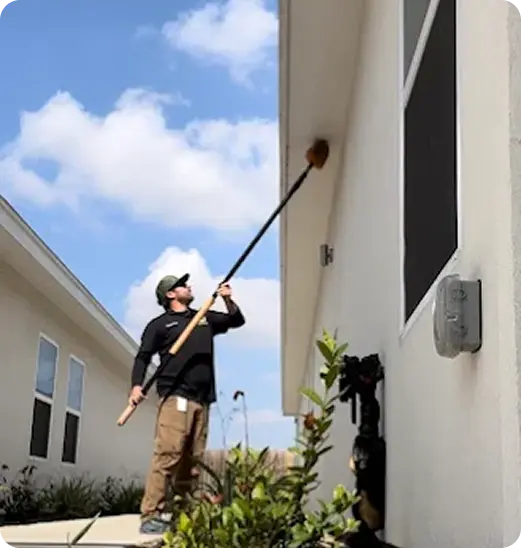


Creates a barrier to stop pests from entering.
Maintains ongoing protection against infestations.
Targets and removes existing pests effectively.


We begin with a detailed inspection of your home or business to pinpoint the source of the problem. This helps us understand exactly what you’re dealing with.


We don’t just treat and leave — we provide prevention tips and follow-up support to keep your space pest-free for the long run. Ready to enjoy peace of mind? Contact us today for your free quote.
Colco Pest and Weed Control proudly serves the Lower Rio Grande Valley, including McAllen, Mission, Edinburg, Pharr, Alton, Weslaco, and Alamo, providing trusted residential and commercial pest and weed control solutions backed by years of local experience.